
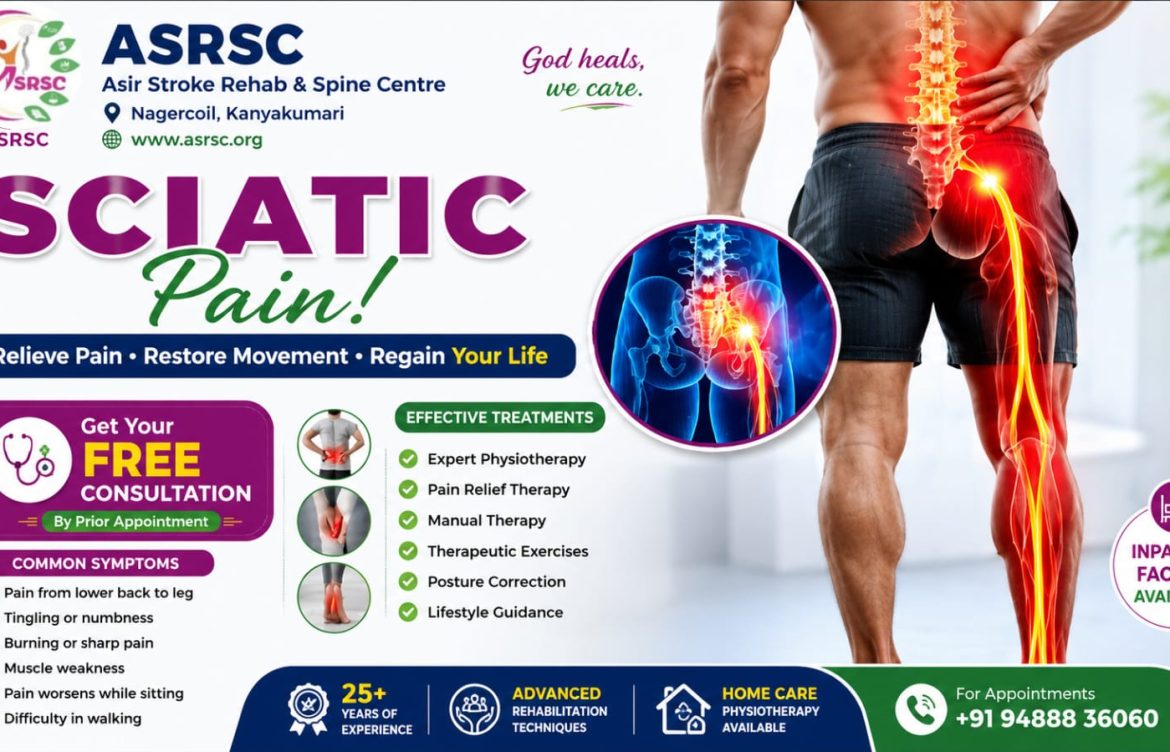
Sciatica: Symptoms and Treatment – A Complete Guide to Relief
Sciatica: Symptoms and Treatment – A Complete Guide to Relief
Sciatica is one of the most common causes of lower back and leg pain, affecting people of all ages, especially those between 30 and 60 years. The pain can range from mild discomfort to severe, disabling pain that interferes with walking, sitting, working, and sleeping. Although sciatica can be frightening, the good news is that most people recover successfully with proper diagnosis, physiotherapy, and lifestyle modifications.
At ASRSC – Asir Stroke Rehab & Spine Centre, Nagercoil, we specialize in evidence-based spine rehabilitation and physiotherapy programs designed to relieve pain, restore movement, and improve quality of life.
Sciatica Symptoms and Treatment: Causes and Diagnosis
Sciatica is not a disease but a symptom caused by irritation, inflammation, or compression of the sciatic nerve, the largest nerve in the human body. The sciatic nerve begins in the lower back, passes through the buttocks, and travels down the back of each leg to the feet.
When this nerve is compressed or irritated, it produces pain that typically starts in the lower back or buttock and radiates down one leg. In some cases, both legs may be affected, although this is less common.
Common Symptoms of Sciatica
The symptoms of sciatica vary depending on the severity and the underlying cause. Some people experience only mild discomfort, while others suffer from severe pain that limits daily activities.
Common symptoms include:
- Pain radiating from the lower back to the buttock and leg
- Sharp, burning, or electric shock-like pain
- Tingling or “pins and needles” sensation
- Numbness in the leg or foot
- Muscle weakness
- Difficulty standing or walking for long periods
- Pain that worsens while sitting
- Increased pain when coughing, sneezing, or bending forward
Some patients describe the pain as constant, while others experience intermittent episodes.
What Causes Sciatica?
Sciatica occurs when the sciatic nerve becomes compressed or irritated. Several spinal conditions may lead to this problem.
The most common causes include:
- Herniated (slipped) lumbar disc
- Lumbar spinal stenosis
- Degenerative disc disease
- Piriformis syndrome
- Spondylolisthesis
- Spine injuries or trauma
- Bone spurs
- Poor posture
- Prolonged sitting
- Pregnancy-related nerve compression
Identifying the exact cause is essential for selecting the most effective treatment plan.
Risk Factors
Certain factors increase the likelihood of developing sciatica, including:
- Age-related spinal degeneration
- Sedentary lifestyle
- Obesity
- Diabetes
- Occupations involving heavy lifting
- Long hours of driving
- Poor core muscle strength
- Smoking
- Repetitive bending or twisting movements
Reducing these risk factors can help prevent future episodes.
How is Sciatica Diagnosed?
Accurate diagnosis is the first step toward successful treatment.
At ASRSC, the assessment may include:
- Detailed medical history
- Physical examination
- Posture assessment
- Neurological examination
- Muscle strength testing
- Reflex testing
- Straight Leg Raise (SLR) Test
- Gait analysis
If necessary, your healthcare provider may recommend investigations such as:
- MRI Scan
- X-ray
- CT Scan
These investigations help identify the underlying cause and guide treatment decisions.
Effective Treatment Options
The majority of patients improve without surgery. Conservative treatment remains the first choice for most individuals.
1. Physiotherapy
Physiotherapy is one of the most effective treatments for sciatica.
A personalized rehabilitation program helps:
- Reduce pain
- Improve flexibility
- Strengthen back and core muscles
- Restore normal movement
- Improve posture
- Prevent recurrence
Treatment plans are tailored to each patient’s condition and recovery goals.
2. Pain Management
Modern physiotherapy uses several techniques to reduce pain and inflammation, including:
- TENS Therapy
- Interferential Therapy (IFT)
- Ultrasound Therapy
- Heat Therapy
- Cold Therapy
- Soft Tissue Mobilization
- Manual Therapy
These treatments help relieve symptoms while promoting healing.
3. Therapeutic Exercises
Specific exercises are prescribed to improve mobility and reduce pressure on the sciatic nerve.
Common exercises include:
- McKenzie Extension Exercises
- Hamstring Stretching
- Piriformis Stretch
- Sciatic Nerve Gliding Exercises
- Core Strengthening
- Lumbar Stabilization Exercises
- Hip Mobility Exercises
Exercises should always be performed under the supervision of a qualified physiotherapist.
4. Lifestyle Modifications
Simple lifestyle changes can significantly improve recovery and reduce future episodes.
Patients are encouraged to:
- Maintain good posture
- Avoid prolonged sitting
- Stay physically active
- Use proper lifting techniques
- Sleep on a supportive mattress
- Maintain a healthy body weight
- Perform regular stretching exercises
These habits protect the spine and promote long-term health.
When Should You See a Specialist?
Seek professional evaluation if:
- Pain lasts longer than two weeks
- Symptoms become progressively worse
- Walking becomes difficult
- Leg weakness develops
- Pain interferes with daily activities
- Numbness spreads to the foot
Immediate medical attention is required if you experience:
- Loss of bladder or bowel control
- Severe weakness in the leg
- Numbness around the groin area
- Sudden severe pain following an accident
These symptoms may indicate a medical emergency.
How ASRSC Can Help
At ASRSC – Asir Stroke Rehab & Spine Centre, Nagercoil, we provide comprehensive care for patients with sciatica and other spine-related conditions.
Our services include:
- Comprehensive Spine Assessment
- Physiotherapy Evaluation
- Chronic Pain Management
- Manual Therapy
- Exercise Rehabilitation
- Electrotherapy Modalities
- Posture Correction
- Home Exercise Programs
- Personalized Rehabilitation Plans
Our goal is to relieve pain, restore function, and help patients return to their normal lifestyle safely and confidently.
Tips to Prevent Sciatica
Although not all cases are preventable, the following habits can reduce your risk:
- Exercise regularly
- Strengthen your core muscles
- Maintain a healthy weight
- Avoid prolonged sitting
- Stretch daily
- Lift heavy objects correctly
- Practice good posture
- Stay physically active
Small daily changes can make a significant difference in maintaining spinal health.
Frequently Asked Questions (FAQ)
Can sciatica heal without surgery?
Yes. Most patients recover successfully with physiotherapy, exercises, pain management, and lifestyle modifications.
Is walking good for sciatica?
Gentle walking is often beneficial because it improves circulation and maintains mobility. However, activities should not significantly increase pain.
How long does recovery take?
Recovery varies depending on the cause and severity. Many patients improve within several weeks, while others may require a longer rehabilitation program.
Can physiotherapy permanently cure sciatica?
Physiotherapy addresses the underlying mechanical problems, reduces pain, improves strength, and helps prevent recurrence. Long-term success depends on following the prescribed exercise program and maintaining a healthy lifestyle.
Can sciatica come back?
Yes. Without proper posture, exercise, and spine care, sciatica may recur. Regular strengthening exercises and healthy habits greatly reduce the risk.
Conclusion
Sciatica can significantly affect your daily life, but early diagnosis and appropriate treatment can lead to excellent recovery. Conservative management, especially physiotherapy, remains the cornerstone of treatment for most patients.
If you are experiencing persistent lower back pain, leg pain, numbness, or tingling, don’t ignore the symptoms. Early intervention can prevent complications and speed up recovery.
At ASRSC – Asir Stroke Rehab & Spine Centre, Nagercoil, our experienced rehabilitation team is committed to providing personalized, evidence-based care to help you regain mobility, reduce pain, and return to the activities you enjoy.
Need relief from sciatica? Contact ASRSC – Asir Stroke Rehab & Spine Centre, Nagercoil today for expert physiotherapy and spine rehabilitation.
Book Your Appointment Today
Take the first step toward a pain-free life with expert spine rehabilitation at ASRSC – Asir Stroke Rehab & Spine Centre, Nagercoil.
Website: www.asrsc.org
Tagline: God heals, we care