
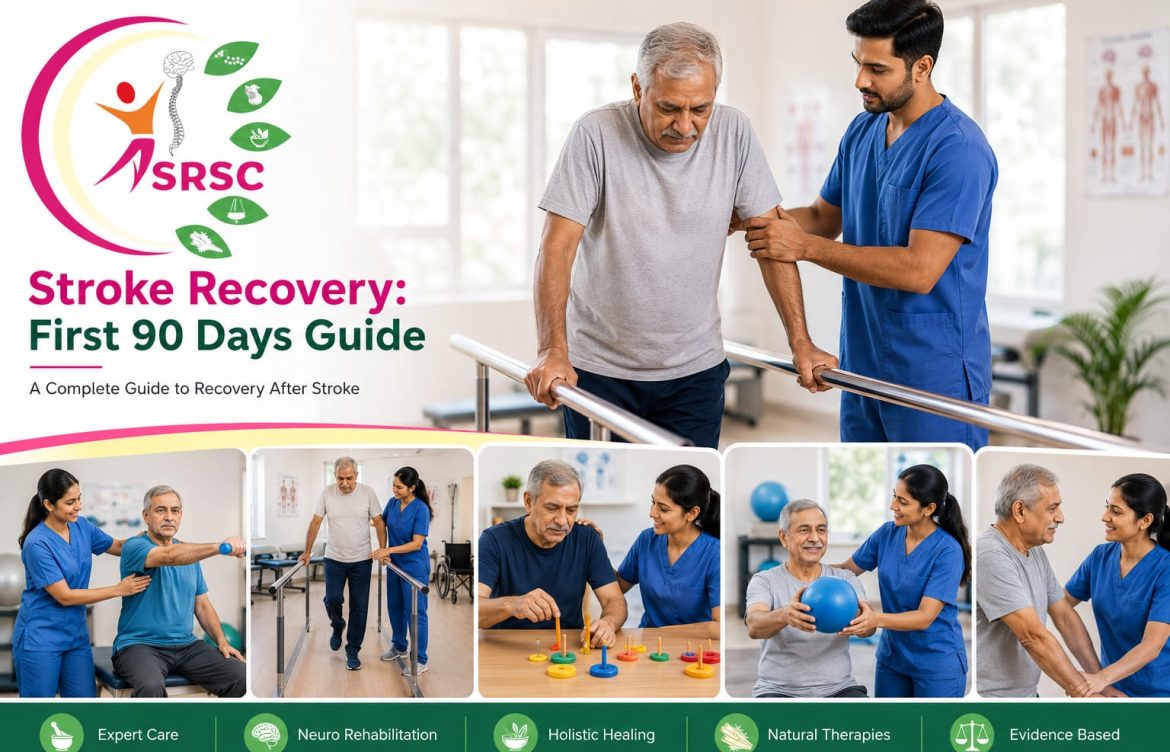
Stroke Recovery: First 90 Days Guide
Stroke Recovery: First 90 Days Guide
A Complete Guide to Recovery After Stroke
A stroke can change a person’s life in an instant. However, with proper rehabilitation, medical care, and family support, many stroke survivors can regain independence and improve their quality of life. The first 90 days after a stroke are especially important because the brain has its greatest ability to heal and adapt during this period.
What Happens After a Stroke?
A stroke occurs when blood flow to part of the brain is interrupted. This can lead to weakness, paralysis, speech difficulties, balance problems, memory issues, and challenges with daily activities.
The recovery journey is different for every individual, but early rehabilitation can significantly improve outcomes.
The First 30 Days: Early Recovery Phase
During the first month, the focus is on stabilizing health and preventing complications.
Key Goals:
- Improve movement and mobility
- Prevent muscle stiffness
- Improve sitting and standing balance
- Begin speech and swallowing therapy if needed
- Educate family members on proper care
Rehabilitation Activities:
- Passive and active range-of-motion exercises
- Bed mobility training
- Sitting balance exercises
- Standing and walking practice
- Speech and language therapy
Family Tips:
- Encourage participation in therapy sessions
- Maintain a positive environment
- Ensure medications are taken regularly
Days 31–60: Building Strength and Independence
As recovery progresses, therapy becomes more intensive.
Key Goals:
- Improve walking ability
- Increase muscle strength
- Enhance coordination and balance
- Improve communication skills
- Develop independence in daily activities
Rehabilitation Activities:
- Strengthening exercises
- Gait training
- Balance training
- Occupational therapy
- Functional task practice
Lifestyle Recommendations:
- Follow a healthy diet
- Control blood pressure and diabetes
- Avoid smoking and excessive alcohol consumption
Days 61–90: Functional Recovery Phase
The third month is often a crucial period for regaining independence.
Key Goals:
- Improve endurance and stamina
- Return to routine activities
- Enhance community mobility
- Continue speech and cognitive rehabilitation
Rehabilitation Activities:
- Advanced balance training
- Community walking practice
- Functional independence training
- Cognitive exercises
- Home exercise program
Importance of Physiotherapy After Stroke
Physiotherapy plays a vital role in helping stroke survivors recover movement, balance, strength, and confidence.
Benefits:
- Improved mobility
- Better balance
- Reduced risk of falls
- Increased muscle strength
- Enhanced quality of life
Warning Signs of a Second Stroke
Seek immediate medical attention if you notice:
- Sudden weakness or numbness
- Difficulty speaking
- Sudden confusion
- Loss of balance
- Severe headache
- Vision problems
Remember FAST:
F – Face Drooping
A – Arm Weakness
S – Speech Difficulty
T – Time to Call Emergency Services
How Family Members Can Help
- Encourage regular therapy
- Support daily exercises
- Monitor medications
- Provide emotional encouragement
- Celebrate small improvements
Stroke Recovery First 90 Days Guide – Final Thoughts
Recovery after stroke is a journey that requires patience, dedication, and professional rehabilitation support. The first 90 days are critical for maximizing recovery and improving long-term outcomes. With expert care, consistent therapy, and family involvement, many stroke survivors can regain independence and enjoy a better quality of life.
Additional Recovery Tips
Stroke recovery is different for every individual. Some patients improve within weeks, while others may take several months. Early rehabilitation, regular physiotherapy, occupational therapy, speech therapy, proper nutrition, and family support play a major role in achieving better recovery.
Patients should attend follow-up appointments regularly, continue prescribed medications, and maintain a healthy lifestyle. Daily walking, balance exercises, hand function training, and cognitive exercises can improve independence and quality of life.
At ASRSC – Asir Stroke Rehab & Spine Centre, Nagercoil, we provide evidence-based stroke rehabilitation programs designed to help patients regain mobility, confidence, and independence with personalized treatment plans.
The Stroke Recovery First 90 Days Guide helps patients and families understand every stage of recovery after stroke. Following a structured Stroke Recovery First 90 Days Guide can improve confidence, rehabilitation outcomes, and independence.
ASRSC provides expert physiotherapy, speech therapy, occupational therapy, and personalized rehabilitation based on the Stroke Recovery First 90 Days Guide to help patients recover safely and effectively.
For more information about stroke prevention and recovery, visit the World Health Organization (WHO):
https://www.who.int
Learn more from the American Stroke Association:
https://www.stroke.org
Frequently Asked Questions (FAQs)
- How long does stroke recovery take?
Recovery varies from person to person. The first 90 days are usually the most important for improvement. - Can physiotherapy help after a stroke?
Yes. Regular physiotherapy improves strength, balance, mobility, and independence. - Where can I get stroke rehabilitation in Nagercoil?
ASRSC provides comprehensive stroke rehabilitation, physiotherapy, and personalized recovery programs in Nagercoil.
ASRSC – Asir Stroke Rehab & Spine Centre
Nagercoil, Kanyakumari
www.asrsc.org
God heals, we care.
Need expert rehabilitation support? Contact ASRSC today.
SEO Keywords:
Stroke Rehabilitation in Nagercoil, Stroke Recovery, Physiotherapy After Stroke, Neuro Rehabilitation, Home Physiotherapy Services, Stroke Rehab Centre in Kanyakumari, Speech Therapy After Stroke, Post Stroke Rehabilitation
Monalisa
June 24, 2026This is a very informative and well-written post. The recovery tips are clear and useful for patients and caregivers. Looking forward to reading more articles from ASRSC.
Ani
June 24, 2026Excellent article. Very useful information for stroke patients and caregivers. Thank you ASRSC team.